

“Real-time bidding is a game-changer for the digital advertising industry, providing unparalleled targeting capabilities and optimization potential.”
Programmatic advertising is changing the game in digital ads. It makes buying and selling ads fast and efficient. Thanks to AI and machine learning, it helps advertisers reach more people at a lower cost.
In 2021, programmatic ads in the US hit over $96 billion. The global spend was $493 billion in 2022 and is expected to hit $557.56 billion by the end of 2025. This shows how big of a deal programmatic solutions are for digital marketing.
Programmatic ads use data and smart targeting to place ads better. This means less waste and more relevant messages to the right people. The whole system works fast, from auctions in under 100 milliseconds to quick ad placements. It’s a powerful tool for advertisers to move quickly and accurately in the digital world.
Key Takeaways
- Programmatic advertising is a big part of the digital ad market, worth over $96 billion in the US in 2021.
- The global ad spend is set to hit $557.56 billion in 2025, thanks to more automated ad buying and selling.
- Programmatic ads use data and smart targeting to improve ad placement and campaign results.
- Automation and AI are key to making programmatic ads more efficient and profitable.
- Mobile ads are growing fast, making up 75.6% of programmatic digital display ads in the US in 2022.
Understanding Programmatic Advertising: Definition and Basics
Programmatic advertising is the automated way of buying and selling digital ads. It has changed how we buy digital ads, targeting people more precisely and efficiently. This new system is faster and more data-driven than old methods.
The Evolution of Digital Ad Buying
The world of digital ads has changed a lot lately. Programmatic advertising has made buying ads easier and faster. Gone are the days of manual negotiations and orders. Now, advanced algorithms and real-time bidding help advertisers quickly target their audience.
Key Components of Programmatic Ecosystem
The programmatic world includes Demand-Side Platforms (DSPs), Supply-Side Platforms (SSPs), and Ad Exchanges. DSPs help advertisers buy ad space. SSPs help publishers sell their ad space to many buyers. Ad Exchanges are where these deals happen, making ad buying fast and automated.
How Automated Ad Buying Works
Here’s how automated ad buying works: when someone visits a website or app, an ad spot is created. This spot is then offered to advertisers in an ad exchange. They bid in real-time to buy the ad space. The highest bidder gets the ad, and it’s shown to the user almost instantly.
| Key Programmatic Advertising Statistics | Value |
|---|---|
| Marketers Planning to Increase Programmatic Investment | Over 30% |
| Ad Viewability Improvement with Programmatic | 17% |
| Programmatic Advertising Types | Display, Video, Native, CTV, DOOH |
Programmatic advertising has many benefits. It improves targeting, saves money, optimizes ads in real-time, and reaches more people. Knowing about programmatic advertising is key for marketers who want to succeed in the digital world.
The Current State of Digital Advertising Market
The digital ad world has changed a lot, with programmatic ads leading the way. Now, 72% of digital display ads are programmatic. In 2025, the global ad spend is expected to hit $557.56 billion, up from $493 billion in 2022.
Mobile ads have played a big role in this growth. In 2022, 75.6% of US programmatic ads were for mobile. Today, we see many types of ads, like display, video, and social ads. Each type offers different ways for advertisers to connect with their audience.
| Key Metrics | 2023 Forecast | 2024 Forecast |
|---|---|---|
| Global Programmatic Ad Spend | $557.56 billion | $680.46 billion |
| US Programmatic Display Ad Spend | $148.8 billion | $168 billion |
| US CTV Programmatic Display Ad Spend | $25.09 billion | $30.62 billion |
| US DOOH Ad Spend | $4.87 billion | $5.66 billion |
As digital ads evolve, privacy and data security are key. Laws like GDPR and CCPA have made data handling more careful. But, the industry is adapting, using new ways to target ads, like contextual ads and first-party data.
Despite hurdles, the digital ad market is still vibrant and changing. Programmatic ads have changed the game, helping small and big businesses reach their audience. The future looks bright, with new trends like retail media networks and programmatic audio. Video content will also keep playing a big role in this evolving field.
Essential Components of Programmatic Platforms
Programmatic advertising has changed the digital ad world. It uses advanced tech and platforms to make buying ads easier. At the heart of this system are three key parts: Demand-Side Platforms (DSPs), Supply-Side Platforms (SSPs), and Ad Exchanges. These work together to make ad buying fast, targeted, and efficient.
Demand-Side Platforms (DSP)
Demand-Side Platforms (DSPs) help advertisers and agencies buy ad spots. They use data and algorithms to find the best ad spots for their audience. DSPs have tools for targeting, optimizing, and reporting, helping advertisers get the most from their ads.
Supply-Side Platforms (SSP)
Supply-Side Platforms (SSPs) help publishers sell their ad space. They collect ad spots from various places and sell them to advertisers through bidding. SSPs use data to help publishers understand and improve their ad revenue.
Ad Exchanges and Their Role
Ad Exchanges are where advertisers and publishers meet to trade ad spots. They connect DSPs and SSPs, making it possible for real-time bidding. This bidding happens quickly, matching ads with the right audience.
DSPs, SSPs, and Ad Exchanges are the heart of programmatic ads. They help advertisers reach their audience better and publishers make more from their ads. This automated, data-driven way of advertising has changed how brands reach consumers online.
| Component | Function | Key Players |
|---|---|---|
| Demand-Side Platform (DSP) | Allows advertisers to purchase targeted ad impressions | Google DV360, The Trade Desk, Viant, Adobe Advertising Cloud |
| Supply-Side Platform (SSP) | Helps publishers monetize their ad inventory | Google Ad Manager, Magnite, Pubmatic, Xandr |
| Ad Exchanges | Facilitate real-time bidding between advertisers and publishers | Google Ad Exchange, Amazon Publisher Services, Verizon Media Exchange |
Types of Programmatic Ad Buying Models
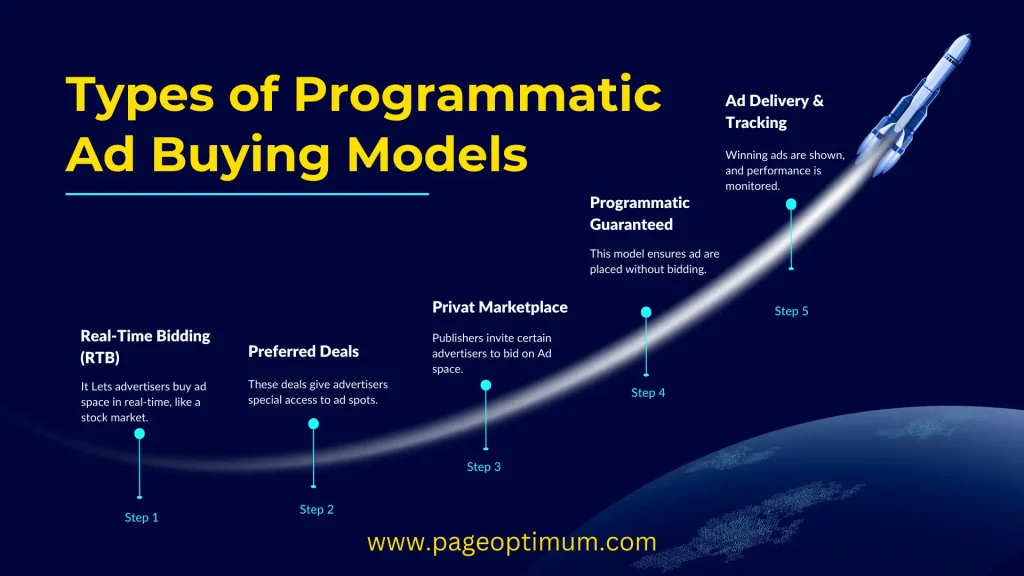
Programmatic advertising has many ad buying models. Each model has its own benefits for advertisers and publishers. Here are some of the main types:
- Real-Time Bidding (RTB): This model is very common. It lets advertisers buy ad space in real-time, like a stock market.
- Preferred Deals: These deals give advertisers special access to ad spots. They offer more control and exclusivity.
- Private Marketplace: Here, publishers invite certain advertisers to bid on ad space. It’s more controlled and transparent than open exchanges.
- Programmatic Guaranteed: This model ensures ads are placed without bidding. It offers a fixed price and guaranteed delivery.
- Ad Delivery & Tracking: Winning ads are shown, and performance is monitored.
These models vary in control, transparency, and efficiency. They meet different needs and goals in digital advertising.
| Buying Model | Key Features | Advantages | Disadvantages |
|---|---|---|---|
| Real-Time Bidding (RTB) | Ads are bought and sold on a per-impression basis in real-time auctions | Efficient, scalable, and flexible; allows for audience targeting and optimization | Less control over ad placements; potential for brand safety issues |
| Preferred Deals | Advertisers negotiate deals with publishers for exclusive access to ad inventory | Increased control, transparency, and brand safety; guaranteed ad placement | Limited scale and flexibility compared to open exchanges |
| Private Marketplace | Publishers invite selected advertisers to bid on ad inventory in a private auction | More control, transparency, and brand safety than open exchanges | Limited participation: potentially higher prices compared to open exchanges |
| Programmatic Guaranteed | Automated ad placement without bidding; fixed pricing and guaranteed delivery | Predictable outcomes, efficient ad placement, and brand safety | Less flexibility and optimization opportunities compared to other models |
| Ad Delivery & Tracking | Delivers ads to specific demographics, interests, and behaviors for more effective audience reach. | Optimizes ad spend by tracking performance and enabling real-time adjustments. | Raises user privacy issues due to tracking across multiple platforms and behaviors. |
These models give advertisers and publishers many ways to reach their audiences. Each has its own benefits and challenges.
Targeting Capabilities and Strategies
Programmatic advertising has many targeting options for marketers. It uses audience targeting and contextual targeting to place ads effectively. This helps improve ad performance and reach the right audience.
Audience Segmentation Methods
Programmatic ads use first-party, second-party, and third-party data for targeting. Audience targeting delivers ads to specific groups based on their interests and behaviors. This makes ads more personal and increases engagement and ROI.
Contextual Targeting Approaches
Contextual targeting places ads on websites that match the ad’s message. This ensures ads are seen by the right people. It’s great for a future without cookies, as it doesn’t rely on third-party data.
Behavioral Targeting Techniques
Behavioral targeting uses online actions to show personalized ads. It looks at browsing history and purchase patterns to target ads. But the loss of third-party cookies is making marketers use privacy-friendly methods more.
Programmatic ads also include geotargeting and retargeting for better ad delivery. As the industry changes, marketers will need to use first-party data and other privacy-focused methods. This will help them keep their campaigns effective in a cookieless world.
Programmatic Ad Formats and Channels
Programmatic advertising offers a wide range of ad formats and channels. Each has its own benefits and reaches different people. From eye-catching display ads to engaging video ads, it keeps getting better. Marketers have a powerful tool to connect with their audience.
Engaging Ad Formats
- Video ads are becoming more popular and are very engaging. They can be shown in various ways, like in-stream or out-stream, to tell stories.
- Rich media ads offer more interactive features. They can have animations, expandable parts, and more, making them appealing to viewers.
- Dynamic ads change content based on certain rules, making them more relevant to the audience.
- Sticky and floating ads stay in one place, making sure your brand is seen as users scroll.
- Native ads blend in with the website, offering a less jarring experience for users.
- High-impact ads grab attention with unique designs, leaving a strong impression.
- Click-to-action ads encourage users to act right away, like calling or texting from the ad.
Diverse Programmatic Channels
Programmatic advertising goes beyond just display ads. It includes many channels and formats:
- Audio ads reach listeners of streaming audio and gamers through programmatic ads.
- Display ads, like static and animated, aim to draw in potential customers online.
- Social media ads on sites like Facebook and Instagram target specific groups of people.
- Digital Out-of-Home (DOOH) ads on digital signs offer a chance to connect with people in real life.
As programmatic ads keep changing, marketers need to keep up. They must use these different formats and channels well. This ensures their ads connect with their audience and achieve their goals.
Real-Time Bidding and Auction Mechanics
Real-Time Bidding (RTB) is key in programmatic ads. It’s how ad spots are sold in live auctions. Advertisers bid on spots to reach their target audience in real-time.
Bidding Strategies
RTB uses two main bidding methods: first price and second-price auctions. In first price, the highest bidder pays their full bid. In second price, they pay the second-highest bid plus a small extra.
Price Optimization Techniques
Programmatic pricing models like CPM, CPC, CPA, and CTC adjust in real-time. They consider user data, ad quality, and demand. This ensures ads are priced right for both advertisers and publishers.
The RTB auction happens fast, in milliseconds. This quick process helps place ads correctly and reach the right people. It also cuts down on ad fraud, making campaigns more effective.
As digital ads keep changing, knowing RTB, auction mechanics, bid optimization, and programmatic pricing models is key. Marketers need this knowledge to make their digital ads work best.
Data Management and Privacy Compliance
In the world of programmatic advertising, data management is key. It helps use user info for targeted ads. Data platforms collect and analyze different types of data to create detailed profiles. This lets advertisers make ads that match what people like and do.
But, as people worry more about their data, following rules is very important. Browsers are stopping third-party cookies, so ads now use first and second-party data. Laws like GDPR and CCPA set strict rules for using personal data. They require getting consent, offering ways to opt out, and keeping data safe.
| Regulation | Key Highlights |
|---|---|
| GDPR | Strict guidelines for collecting and processing personal data in the EU, requiring consent and data minimization practices. |
| CCPA | Grants California residents specific rights over their personal data, including the right to access, delete, and opt-out of data sharing. |
| PIPEDA | Canada’s data privacy law that impacts the collection, use, and disclosure of personal information in advertising. |
To follow rules and keep trust, ads need strong security. This includes encryption, access controls, and regular checks. Being open about how data is used and giving users control over it is also key.
The digital ad world keeps changing, and managing data and privacy is crucial. By balancing using data for ads and keeping privacy, ads can be both personal and effective. This way, advertisers can keep their audience’s trust and confidence.
Measuring Success: KPIs and Analytics
Marketers in the programmatic advertising world need strong KPIs and analytics. These tools help them see how well their campaigns are doing. They look at things like how people interact with ads and how much money they make back.
Performance Metrics
Here are some key ad performance metrics:
- Impressions: The total number of times an ad is shown, showing how much people see the brand.
- Clicks: The number of times people click on an ad, showing how well it grabs attention.
- Click-Through Rate (CTR): A percentage showing how many people click on an ad after seeing it, helping to see if the ad and its target are a good match.
- Conversions: Actions people take after seeing or clicking on an ad, like buying something or signing up, which is key to knowing if a campaign worked.
- Viewability: The percentage of times ads are actually seen by users, helping to check if ads are in good spots.
ROI Calculation Methods
It’s crucial to measure the return on investment (ROI) for programmatic ads. This helps justify spending on marketing and improve future plans. Here are some ways to calculate ROI:
- Cost Per Acquisition (CPA): The cost to get each desired action, like a sale, showing how well ads spend is used.
- Return on Ad Spend (ROAS): The money made or actions taken for every dollar spent on ads, showing if ads are profitable.
- Lifetime Customer Value (LCV): Looking at the value of customers over time, LCV shows the lasting effect of ads on business growth.
By keeping an eye on these metrics and ROI, marketers can make smart choices. They can improve their ads, use their budget better, and help their business grow.
Common Challenges and Solutions
Programmatic advertising is growing fast, but it faces many challenges. Advertisers and publishers must tackle these issues head-on. One big problem is ad fraud, which wastes a lot of money. It’s estimated that 22% of all digital ad spending goes to scams, causing huge losses.
Brand safety is another major concern. Advertisers want to keep their good names safe and avoid bad ads. To help, programmatic platforms use tools like whitelists and blacklists. These tools make sure ads are shown in places that are safe for brands.
But, it’s hard to know where ads really go before they reach people. This lack of transparency is a big problem. To fix these issues, programmatic platforms are using better fraud detection tools. For example, Outbrain uses its own and other companies’ tools to fight ad fraud.
They also work on making the supply chain clearer, like with ads.txt. And, they focus on making sure ads are seen and counted right. This makes programmatic ads better and more effective for everyone.

About The Author
Prabhakar J
About the Author: Prabhakar J is a digital marketing specialist with expertise in SEO, PPC, and website development. He has helped businesses across the USA improve online visibility, generate qualified leads, and achieve long-term growth through data-driven strategies.
Frequently Asked Questions
Others:
Discover in-depth insights on this topic by exploring our detailed article on Website Development.